
Go, See The World, And Find What's Already In Front Of You

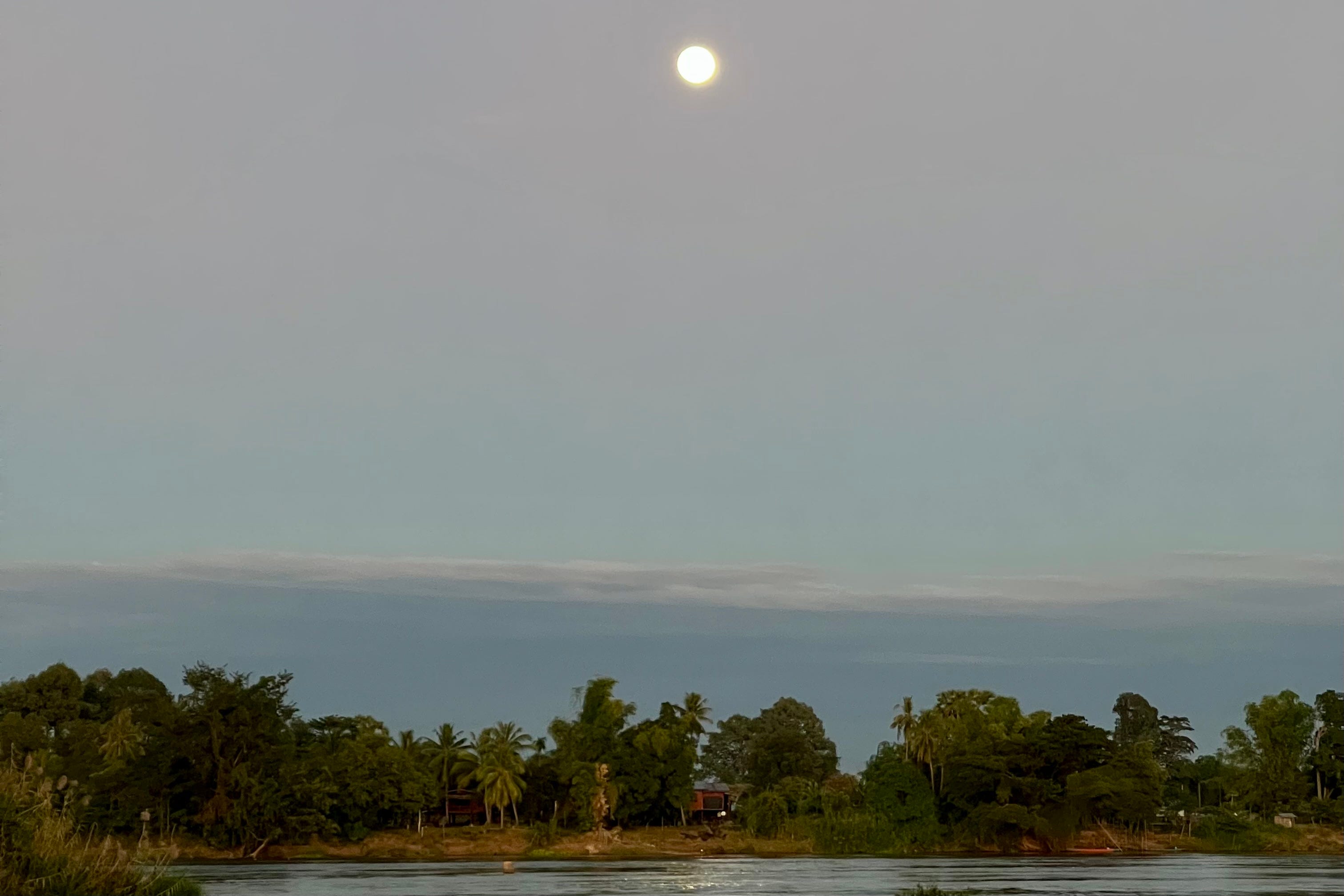
I stare at the moon.
I watch my friends swim in the ocean.
I listen to men argue while they eat.
I join in a pick-up sports game.
I drink tea in a friend’s house.
Ordinary. Familiar. These statements read like average moments in the life of any young man or woman living in the modern era.
Is it not strange, then, that these commonplace scenes are among the most precious and poignant memories I’ve acquired from over a year spent living abroad in Asia and Africa? That as I think back over those wondrous 13 months of fate’s wiles, it is these memories which rise first to the surface and crash over me like whitecaps?
That even now, as I lie in bed hours after I should have surrendered to sleep, it is a simple photo of a river in Kyrgyzstan which lays the final brick in my resolve to leave behind my home and journey into the unknown once again?
It’s not the white yurts which dot the green slopes leading up to snow-covered mountains. It’s not the language of Kyrgyzstan, nor its customs, its food, or the exotic look of its locals.
It’s this river, hemmed in by the tricolored foliage of autumn, posted to Google Maps by a user named Мамытбек Турдуев. I will leave behind the comforts of home for the rigors of the open road, because of this river, discovered in the happenstance of a few dozen arbitrary taps and swipes through a digital map on glass rectangle.
It is this ordinary river, just as it is those ordinary memories.
Going through our daily lives, we are regularly in contact with the remarkable. Only, it doesn’t always feel that way. The regularity of routine has a way of obscuring extraordinary acts, merely by association with the more specific acts which frame them.
The moon is just “the moon.” You’ve seen it from your bedroom window every night since you can remember and even painted it with watercolors a time or two.
Hospitality is just “hanging out with friends.” You’ve been doing it with the same people for as long as you’ve been alive, and whenever it happens you’re usually more focused what you want to do: play Catan or watch a movie.
Conversation is just “talking.” It happens so much you often put on headphones to block it out, and more often than not you’re using it just to order a coffee or talk logistics with your coworkers.
If you fail to find these things remarkable, it’s not your fault.
Remember, as a kid, when you’d suddenly be struck with the inspiration to move around the furniture in your room? After a year of having everything in the same spot, you’d change it all around in one short hour. And then, like magic, you’d notice the room again. There’s a window here. The ceiling is oddly high in this corner. This wall is empty, and its huge. Of course, the room was there all along, but the focus was on your stuff. By moving around your furniture, the room came into focus again.
The room is the extraordinary: the wonders which underlie every golden moment.
The furniture is routine: the familiarity which draws away your attention and obscures what lies beneath.
Moving the furniture around is the act of travel: the vicious ripping away of context, which forces your focus back onto what has been there all along.
5:00 a.m., Sri Lanka, on the way to a jungle safari.
We stopped at a random roadside shop to use the bathroom, and in a throwaway half-minute while I waited for the others to trickle back out, the gibbous moon, which had been just another given for all my life, so took me aback that I return there in my mind every time I behold its pale tear in the dark fabric of the night sky, regardless of wherever I am in the present.
The moon. A floating rock, ceaselessly circling our own floating rock, the earth. That pale, nocturnal counterpart to its father the sun. Seen a thousand times—only now noticed.
9:00 p.m., Laos, sick with a high fever.
Even the nearest town was a far drive away, and the time to hail a taxi had long since passed. I knocked on the door of a local Laotian man staying in the next room over, and was promptly given both Tylenol and a promise to drive me to town on his motorcycle the next morning—though I know for a fact he would’ve taken me that very night if I’d asked. I’ve received medicine a hundred different times before from a hundred different people, and yet this is the exchange which has stayed with me.
Hospitality. Being made truly welcome by an other, and imparted with goods or services which cost them, but not you. Experienced a hundred times—only now properly appreciated.
1:00 p.m., Tanzania, eating fresh goat in a mud hut.
“How many people can the meat from one goat feed?” I asked with the purest of intentions, inadvertently starting a five-minute argument between the tribesmen I ate with. Though I couldn’t understand the vehement Maasai words the men spoke, their body language told me everything I needed to know about where my question had taken them. How strange that a discussion which I couldn’t understand, stands out from all the others in my mind.
Conversation. Weighing the merits of new and old ideas with people who are interested in doing the same. Hearing others’ stories and sharing your own. Partaken in tens of thousands of times—only now really listened.
When everything around you changes—when you’re surrounded by a language you can’t understand, a food you’ve never tried, and a city you’ve never navigated—the deeper majesties that exist unchanging everywhere shine through with a renewed radiance. Traveling is moving around the furniture of your life, forcing back into view the room behind it. The room was there all along—you just missed it because you were too focused on the furniture.
Of course, this perspective isn’t always top-of-mind for all travelers everywhere, and it doesn’t have to be. Whether you notice the room or not, travel is also wonderful in the way it continually brings you into contact with new furniture. The act of experiencing new things alone is fascinating in its own right.
But new things are… well, just that: new things. And the thing about new things is that, if you wait long enough, they become old things. If what you’re after is novelty alone, that feeling of wonder is bound to fade.
To contrast the idea of mere novelty with the deeper truths I’m putting forward, consider the nearly ubiquitous traveler’s experience of watching a foreign celebration of some sort.
The first thing you always notice is the exoticism. Maybe the men are shirtless. The women are painted. They’re singing in such a strange way, and playing musical instruments you’ve never seen.
And yet, where is the real wonder in moments such as these? Is it just in the performers’ foreign accoutrements? Or is it in the simple fact that you’re beholding fellow humans on the other side of the world doing the very same thing you do in your home country, and which humans have done for time immemorial? Singing, dancing, making merry, and doing it together?
The initial novelty is what grabs your attention. But the simple act underneath is what puts the lump in your throat and sets your eyes to burning. What makes you feel happy for having seen it, and forever changed for the better. It’s what gives you a lasting love for these people you’d never even thought of before last year.
But why?
Why do these simple acts—singing, dancing, hospitality, or conversation—and these simple things—the moon, or a random river in Kyrgyzstan—hold so much pull on our hearts? Why do they pluck, wordless, at some hidden set of strings inside of us, bringing forth such sweet melodies?
In his book The Mountain Shadow, Gregory David Roberts says,
Only hope goes on forever, because hope doesn’t belong to us: it belongs to our ancestors, the first of our kind, whose brave love for one another gave us most of the good that we are. And hope, that ancient seed, redeems the heart it feeds.
Though I disagree with Mr. Roberts that hope is the only thing that goes on forever, his point is a profound one: these deeper acts between humans, and these natural places on the earth—they don’t belong to us.
On the other hand, things like culture, customs, fashion, and even food—these things that travelers find exotic—are always changing. Sometimes the changes are cyclical, while other times something goes out of style never to come back in. It can take something as trivial as a single celebrity figure to change the culture of entire swathes of a population. These things are malleable, fickle, beholden to the whims of individuals and groups. They belong to us.
Hope does not belong to us. Love does not belong to us. Joyous celebration, hospitable kindness, rousing conversation, do not belong to us. The yellow-white moon, the coldness of a raging river, the eternity of the ocean, do not belong to us.
These things are bigger, older by far, than any one person, group, or civilization. They belong, as Gregory David Roberts says, to our ancestors.
But even those ancestors can’t really lay claim to these things. For didn’t they inherit them from their ancestors? As we follow this rope further and further into the past, its true beginning loses itself in the fog of time, until we’re left with something frayed, a widening of causality that seems to escape definition.
Whether there is an explanation for this concept, whether there needs to be one, and what it would mean if we find it out, are questions I will leave in the hands of the reader.
Perhaps the foremost cause of human suffering is the subconscious idea of “us” and the “other.” Tribalism. Us good, other bad.
And yet, when you go to a place filled with others, you will almost invariably find the otherness to be superficial. Indeed, it’s the very otherness itself that exposes its own subservience to these deeper truths that don’t belong to any one of us. And when you see this—when you really feel its wordless power—a wall crumbles inside.
A wall whose crumbling, if only it could happen in every human heart everywhere, just might be enough to turn this world into something truly holy.