I Almost Got Stranded In Africa
Opening a non-profit library in a remote Tanzanian village amidst food poisoning and the deadly election riots of 2025

In U.S. law, the “excited utterance rule” allows into the court statements that were made in response to a “startling event,” reasoning that “a statement made under stress is likely to be trustworthy and unlikely to be a premeditated falsehood.”
Though I wrote this journal entry as most of the drama was finally beginning to wind down, the events of the trip that it recounts were so unexpected, so startling, and so perilously close to falling straight over the edge of the world into true disaster, that what follows cannot be described as anything other than an “excited utterance,” in the most trustworthy sense of the phrase.
First, some context. I lived in Tanzania for four months in late 2023, working with an amazing non-profit organization, From Hearts 2 Hands, started by my friend Briana Greene. The latest big project we’d been working on was the construction of a massive library for the 700+ students of Lendikinya village, way out in rural Maasai land.
This trip—the one recounted below—was a big one. The library construction was finally finished in October 2025, and so we—Briana, myself, and the rest of the non-profit team—were returning to Tanzania for one week to get the library fully decorated, stocked, and ready for the grand opening, which was scheduled for the end of that week.
It just so happened that that very same week was also election week in Tanzania—and the government in Tanzania is of the “so corrupt there’s no need to even hide it” type. But I fear if I say any more, I’ll end up spoiling the story before even beginning it.
I trust I’ve given enough context to get you started. Enjoy.
Part 1: Arrival
The Village | Library | New Friends | Ceremony | Love | New Language | Dinner
Arriving in Lendikinya, we were greeted with a level of hospitality I’m not sure I’ve experienced anywhere else.
I got a bit choked up at first sight of the library in all its glory—thinking to myself, “Briana did this?”—and then Mr. Greene (Briana’s dad) having a similar moment inside made us all more emotional still.
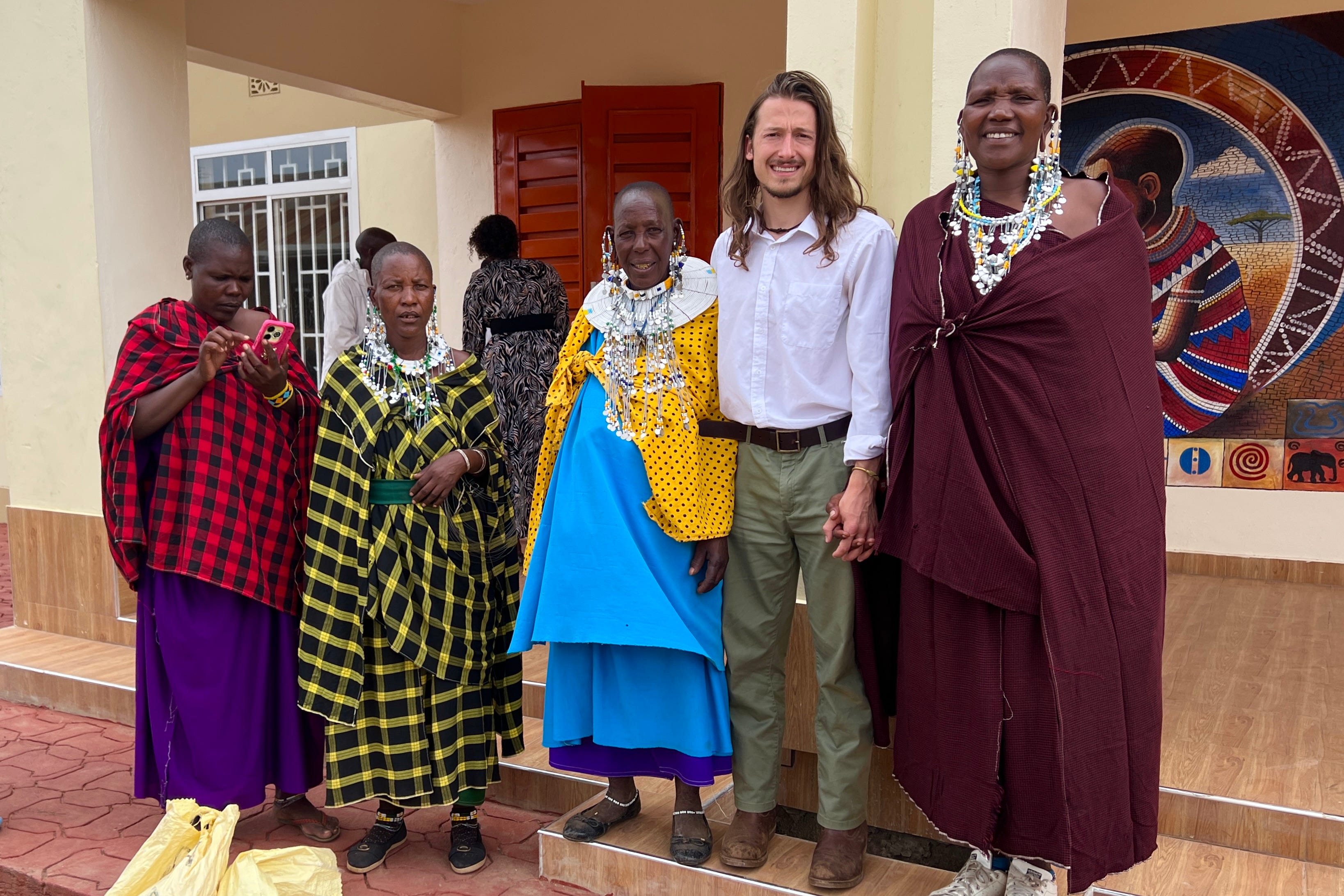
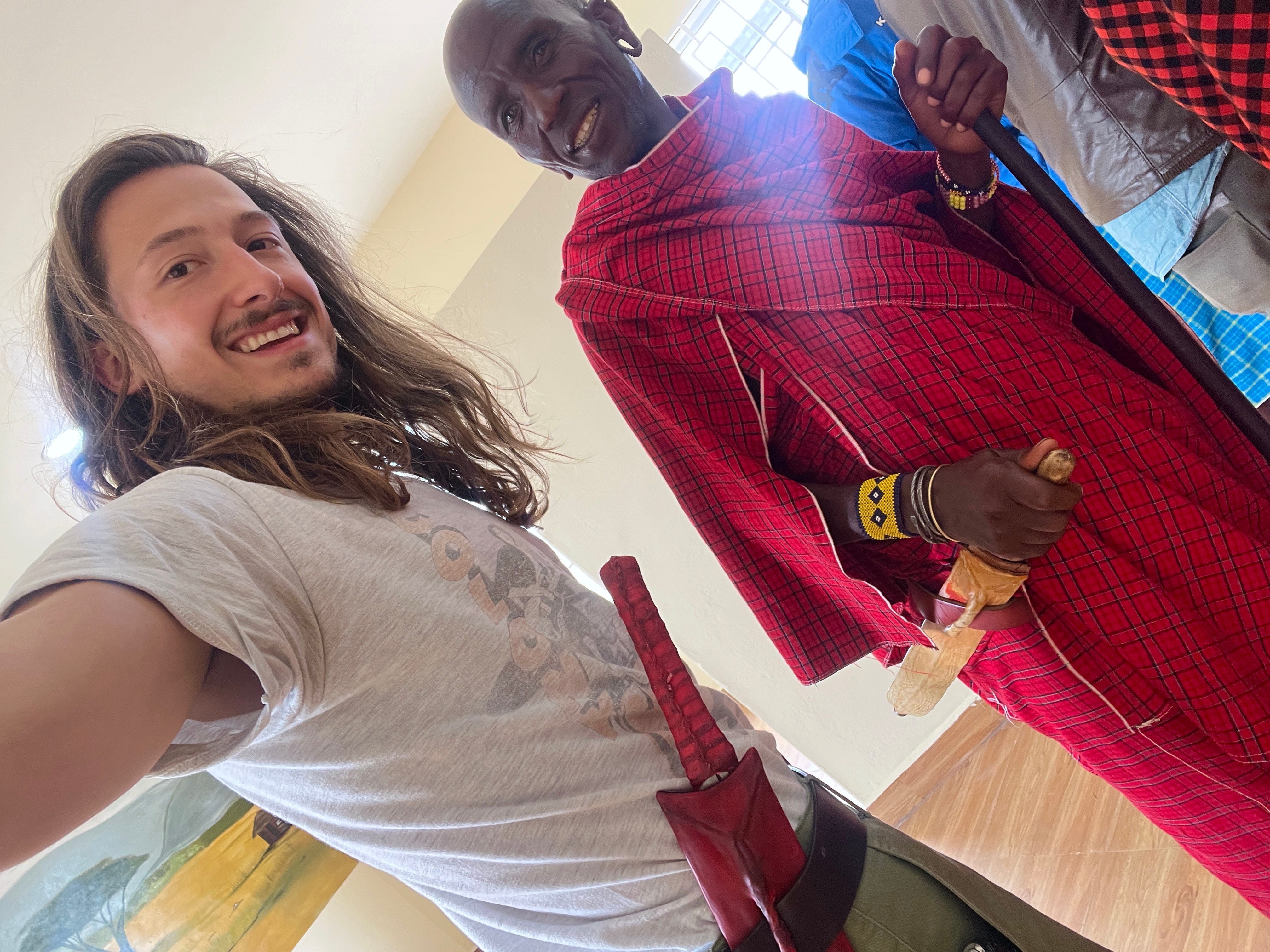
Emanuel (my new stoic Maasai friend who wore a leather jacket the whole trip), and “Meleo,” the picture-perfect exotic wise Maasai warrior, escorted our group down to a series of huts they had built brand new for us. As we reached the area, we were greeted by a group of Maasai women, dancing, singing, and hugging us with huge smiles on their faces—smiles that spoke of real love. Meleo began pounding his walking stick on the ground and chanting along in harmony with the women’s singing, before handing the stick to me and urging me to do the same—which I of course did with honor.
How is it that a group of people who have next to nothing in common with me, who speak a different language, eat different food, come from a very different culture, and live on the other side of the world, can so instantly feel like old friends, whom I would trust with my very life? As I fought back tears, I was struck that this cross-culture love and friendship might just be the most beautiful thing there is—and perhaps it hints that, beneath all of our differences, there is some shared value that both parties possess in exact copies, in perfect harmony, and it’s much more important than the clothes we wear, the food we eat, or the place we live.
On the walk back to the library and our campsite, I grilled Emanuel on every single Maasai word I could learn and write down, to his great enjoyment. I learned that the Maasai word for “God” and “sky” are one and the same.
Back at the campsite, we ate a delicious meal of soup, rice, beans and chapati prepared by our local Tanzanian chef Alfred and his crew, who absolutely spoiled us the entire time with three hot square meals a day, regardless of whatever drama happened to be unfolding at the time—and drama there was indeed.
Part 2: Things Go Wrong
Internet Shutdown | Fainting | Revived | Riots & Violence | Friends in Trouble | Vomiting | Civil War?
We all knew that Election Day was on Wednesday, but we didn’t know exactly what to expect in terms of riots and general unrest. Things kicked off with me trying to connect one of the library computers to my personal hotspot. It connected just fine, but nothing would actually load. This was when Seuri, the local Maasai library clerk to-be, informed us that the government had casually just “shut off” the internet to try and contain the rioting. We officially had no access to news, iMessage, WhatsApp, or anything using data.
Around 10 a.m. I heard Briana yelling “Dad? Dad!” in a panicked voice from the other room, then yelling for Derek (the senior-most doctor in our company). Derek then sprinted in like Tom Cruise, and immediately started tending to Mr. Greene, who had basically passed out due to lack of hydration after battling some unnamed stomach illness and exhaustion from jet lag. As always in situations like this, I am in awe of doctors, their knowledge, and their ability to calm and comfort those in the most immediate need.
Keep in mind, we are way out in the middle of nowhere—the closest hospital is a tiny military hospital 30 (45?) minutes away on egregiously potholed dirt roads. Thankfully, we had three doctors in our group at this point, so Mr. Greene was quickly revived and taken care of.
Fast forward a few hours, and Sam, our Tanzanian videographer, comes up to me saying “Man, the riots are really crazy out there. My brother is in Dar es Salaam and he said it’s getting bad.” Again, the internet is down, so he’s getting this information just by phone calls or domestic SMS messages from friends—those of us without local numbers and credits are totally in the dark. A few minutes later, he tells me he heard five people were just shot in Leganga, which is literally a one-minute drive from Usa River, where the Kuboja’s live—the Kuboja’s being my former host family, who I stayed with during the entire four months I used to live in Tanzania—and also where we all just came from before arriving in the village.
Around this exact same time, Lily—the Kubojas’ daughter, who’s with us in the village—tells me her mom hasn’t come home yet, and Joshua, her dad, is getting worried. I ask where she went, and Lily tells me she was visiting her friend Elizabeth, who lives where? Leganga. At this point my stomach is starting to rumble with nervous energy—and the timing here is just perfect, because I just now get word that Mrs. Greene (Briana’s mom) is outside vomiting in the bathrooms, which are essentially just tents with porta-john bottoms. Michelle, another one of Briana’s friends, had arrived earlier, so we now have four doctors in our group, and they’re all really pulling their weight at the moment. There’s lots of casual banter about stool consistency.
It’s now evening, and we continue setting up the library, but there’s definitely a slight pall over the night, as we’re all concerned about the growing unrest over the election and Mrs. Greene’s situation. Thankfully, we’re about as safe as you can be in Tanzania at this time, way out in this remote Maasai village. Edson, a local Tanzanian and integral member of our team (and one of my dear friends), assures me that the majority of the riots are in the cities, where the military are urging the citizens to fight the police, who support the oppressive current administration. This is scary in its own right, since it means this isn’t just a standard protest to be quelled by the government—it’s two rival factions of the government pitted against one another, which sounds to me like civil war material. And also, the main town of Monduli isn’t that far away, so it’s hard not to feel nervous that the conflict could somehow make its way to us.
Part 3: Things Get Worse
Electricity Problems | False Alarm | Fire | Mysterious Car | Sickness Spreads | Bitter Disappointment | Motorcycle | To the Hospital
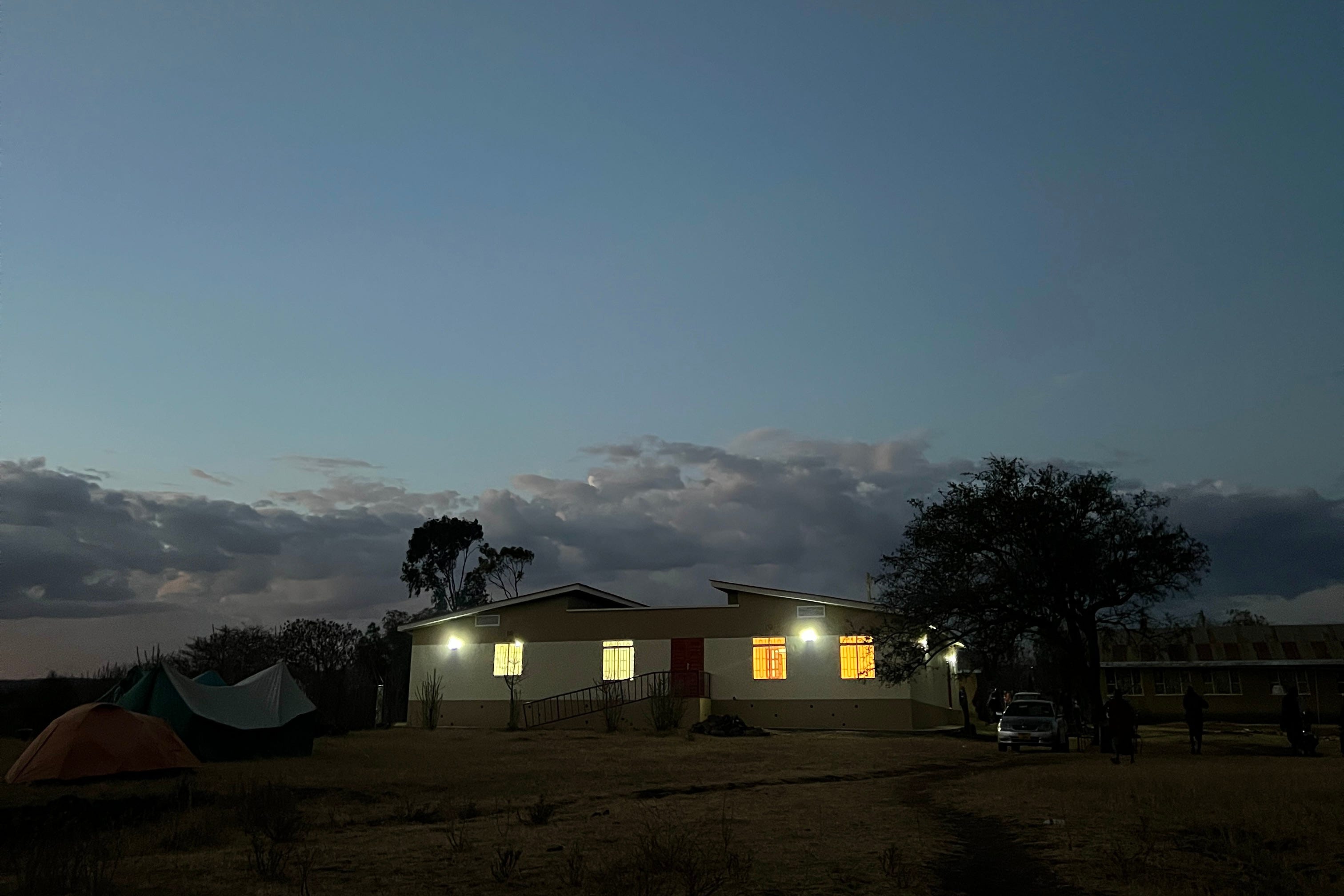
Suddenly, the power is cut. The entire library just goes black, and there’s a hideous two-second silence as everyone just contemplates the implications here. Did the government do this? Is it intentional? Are there people outside? There’s a tangible increase in my unease now. The disorientation and limited perception from being in darkness are extremely unnerving.
Flashlights are turned on, and we’re all saying “Ohhh boy, here we go,” when the lights suddenly come back on. I give it about two minutes before I relax fully, as I was nearly certain they would just go off again shortly. Thankfully, they held for the rest of the night. Don’t worry, however—the drama is far from over.
I forget who delivered the message, but I’m told there’s “a fire outside.” I rush outside to see, and sure enough, in the distance I see an orange blaze on the hillside, the ferocious wind driving the smoke to the side and (ostensibly) fanning the flames even more. I’m having the same thoughts I had when the power went out: What the heck is this? Is there a mob out there? Unlikely, I know, but come on—on this night of all nights the power is cut and there’s a fire out there? If this is all unrelated, it feels like a pretty remarkable set of coincidences.
I talk to Edson, and he assures me that this is totally normal, and the tribesmen often do controlled burns just like this in order to prime the farmland. I allow myself to relax a little bit.
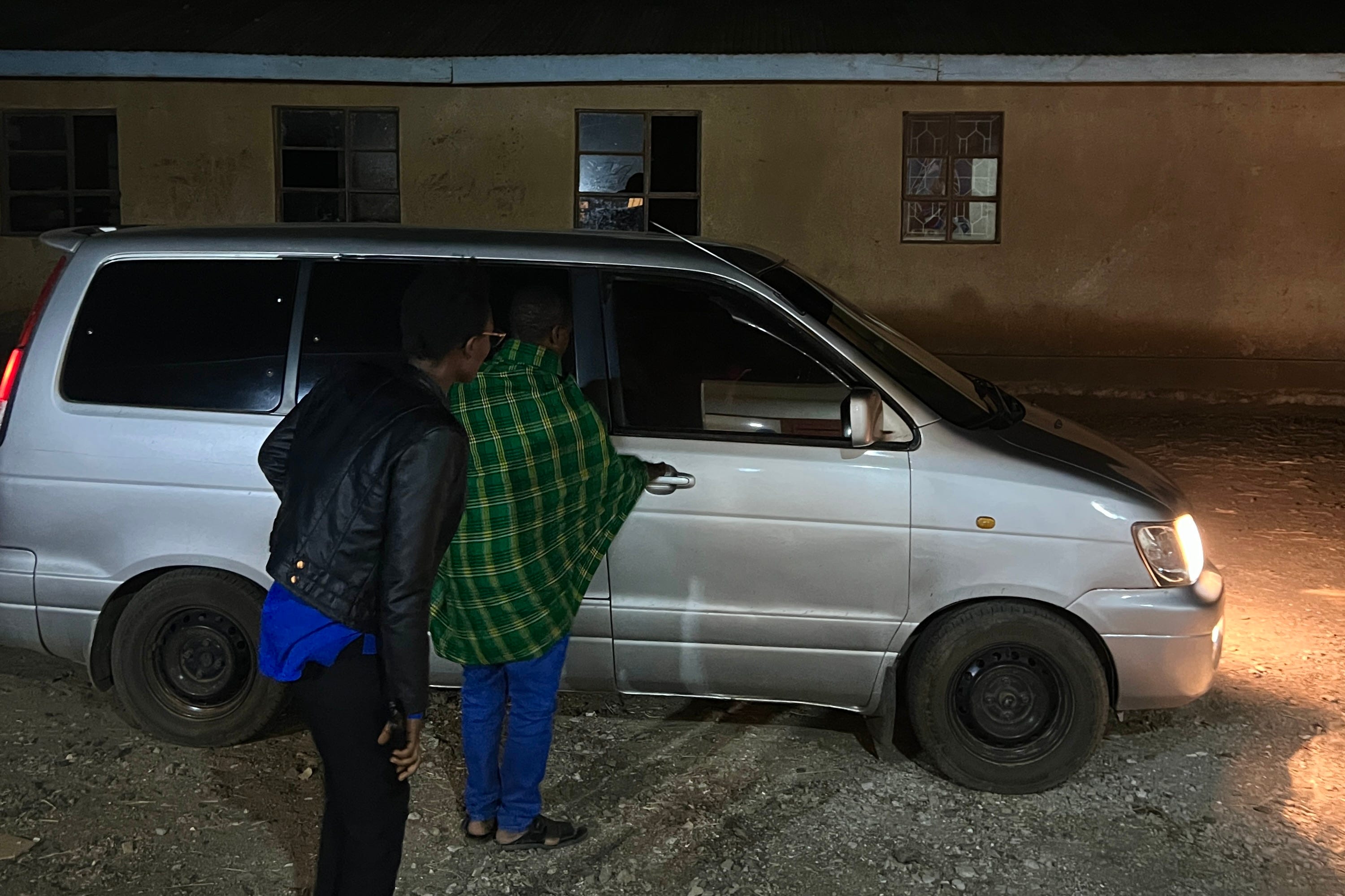
That is, until I’m getting water from the mess tent, and I see a tiny little blacked-out sedan pulling in to the front of the library. Janae, another member of our team from America, is with me at the time, and I tell her it’s probably just Edson—but then we both remember that Edson’s car is an SUV, not a sedan. A fair amount of sketchy experiences have taught me that knowing with certainty what is out there is almost always better than the extra safety gained from staying back—so I rush to the front of the library to see, stomach churning hideously. As I write this now, I actually forget who was in that car—I think it was Edson after all?—but it’s safe to say it was a friend, and not someone threatening.
Then Derek comes back inside from where he, Briana, Michelle, and Jessie (another doctor friend) had been working tirelessly tending to Mrs. Greene, who still wasn’t showing any improvement. “Patient three,” he says. It takes me a second to realize he’s talking about Briana, who’d told me earlier that she was starting to feel nauseous, but couldn’t be sure if it was sickness or just anxiety. Not only is this just tremendously unfortunate, it’s also a shame because tomorrow is the grand opening of the library, and Briana is obviously the guest of honor, and is supposed to give a tour and speech.
At this point, Derek is pretty dead set on taking everyone to the nearby military hospital, so we abandon our pathetic project of moving the patients inside and making a makeshift privacy screen with a ladder and a tarp. The patients are transported to the car, but Briana has to stop halfway there to spend five minutes retching violently into a plastic bag.
I wanted to be respectful of space, so I didn’t come too close, but there’s one heartbreaking moment which will stay with me for a long time, where I caught sight of Briana from the other room, seated with the plastic bag in front of her, and tears streaming down her face. Knowing Briana, I have no doubt her tears are caused not by her illness, but by disappointment over what feels like the negation of months (if not years) of hard work to get this library project over the goal line. Why now? Why, at this final moment, looked forward to for months, where we’re all in Tanzania with the big opening day scheduled for tomorrow, did these unfortunate circumstances all converge? I’m swept with a wave of sadness as I see her, and I’m thankful for Zachary (another American team member and friend), who hugs her softly.
Around this time (about 3:30 a.m.), we hear a vehicle approaching fast, which is extremely odd since we’re so far in the middle of nowhere. We all rush to the front of the library (at least, those of us who are mobile), and again, I just have no idea what to expect, so I’m assuming the worst. It’s some guy alone on a motorcycle, and we all watch with bated breath as he, thankfully, just whizzes by, never to be seen again. “He’s a normal guy just passing by,” Edson declares confidently.
We load up the car with Edson at the wheel, Derek and Michelle as the traveling doctors, Briana and Mrs. Greene as the patients, and Liza and Ellen (local Tanzanian members of our team) as moral support. On a providential, literally last-second whim, I confirm with Edson whether or not Ellen (his wife) is going with them. He says yes, but I remind him that she is the only person in the entire group who can communicate with Edson (or anyone!), since they have local numbers with SMS credits. She of course exits the car and stays with us after I raise this concern, and I hate to think of what might’ve happened had they left sooner and we were fully unable to communicate with them at all.
(Edit: as I write this now, I remember Sam also had a local number with SMS capability—so maybe this wasn’t quite as dire as it sounds, after all.)
Part 4: Things Get Better
Recovery | Library Completion | Watermelons | Village Jog | Basketball | Gutting a Sheep
I’m happy to say that this was basically the peak of the madness, and everything after this point was a cooling-down. The hospital accepted the patients with no issues, and they slowly recovered, at least enough to participate in the opening ceremony the following day (though Briana was basically pushed to the brink, and possibly even extended the duration of her sickness from over-exertion here). Derek also informed me afterward that at one point during the ride to the hospital, Edson’s erratic driving veered the car into a pothole so deep, and the impact made a sound so wretched, that he was absolutely certain an axle had broken. And yet, that little gray car just powered on.
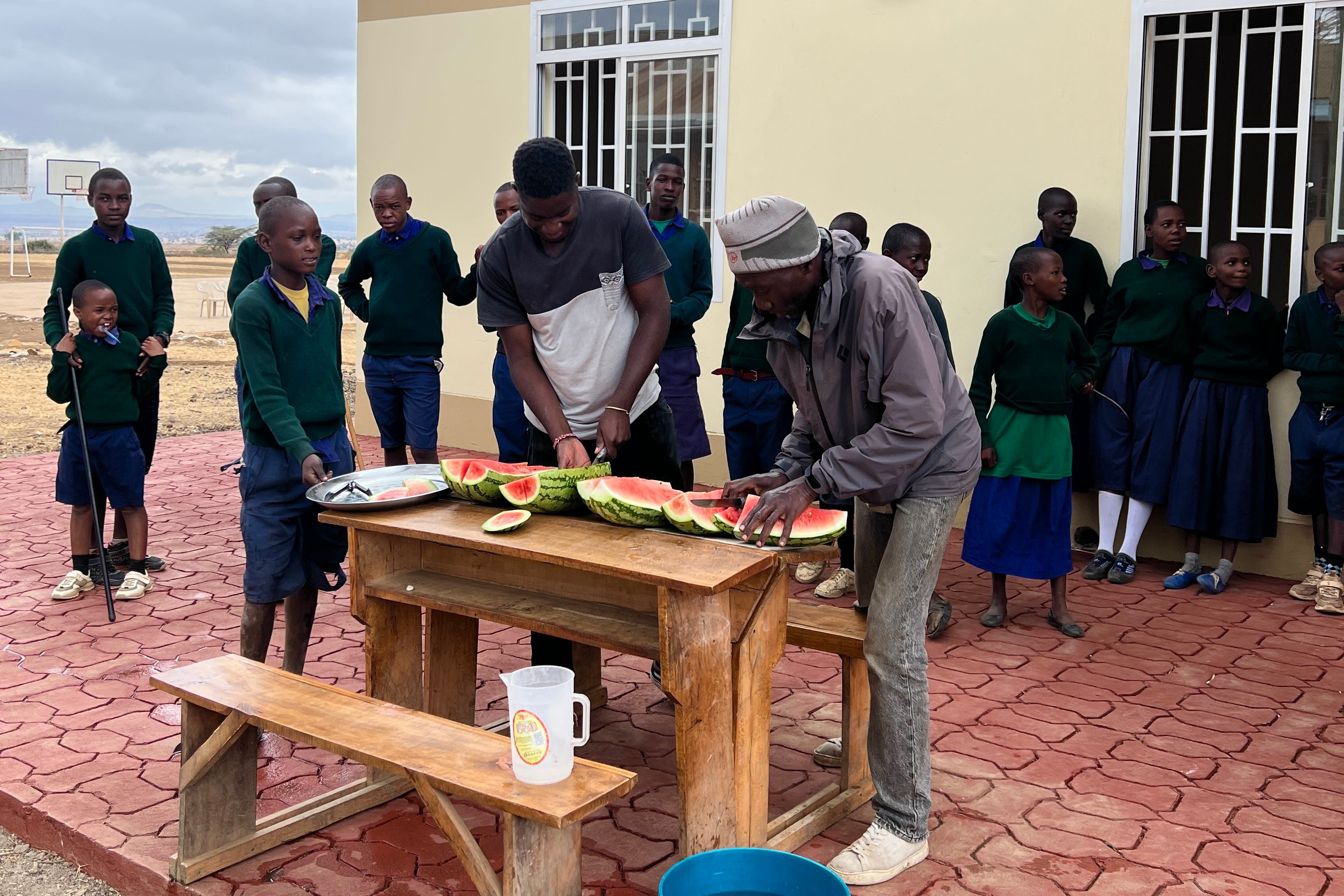
We finished prepping most of library rooms, which ended up looking amazing even though the shipping container with the majority of the big items was still held at customs. Throughout various points in the setup process, we had Maasai men crawling around in the rafters locating ceiling beams in order to hang hooks. We handed out watermelons to the students (kindly provided by American team member Stephanie); gave tours of the library to the village elders and women; Briana, her parents, Edson and Liza were gifted literal cows and sheep (a massive honor coming from the Maasai, who subsist primarily on livestock); I went on a run with the charismatic, always-smiling Seuri through the village, almost impaling myself on a stick in the dark; Zachary, Derek, Sam and I played an intense game of basketball, which still hasn’t technically finished; I was called over by Sam and Emanuel for the somber honor of helping to gut a sheep which we would eat the next day, the kidneys of which Emanuel popped into his mouth on the spot, still warm; and I learned the Maasai word for “fart.”
Part 5: Departure
Safari | Farewells | Unrest | To the Airport | Flights Home
The day after, our group parted ways, some going to a safari (which was actually one of the safest places to be amidst the riots, which, again, were primarily urban), and some going back home to Usa River. Eventually, we all met up again at Beatrice Kuboja’s house for final goodbyes, which were, as always with Tanzania and its amazing people, harder and more conflicting than I expected them to be.
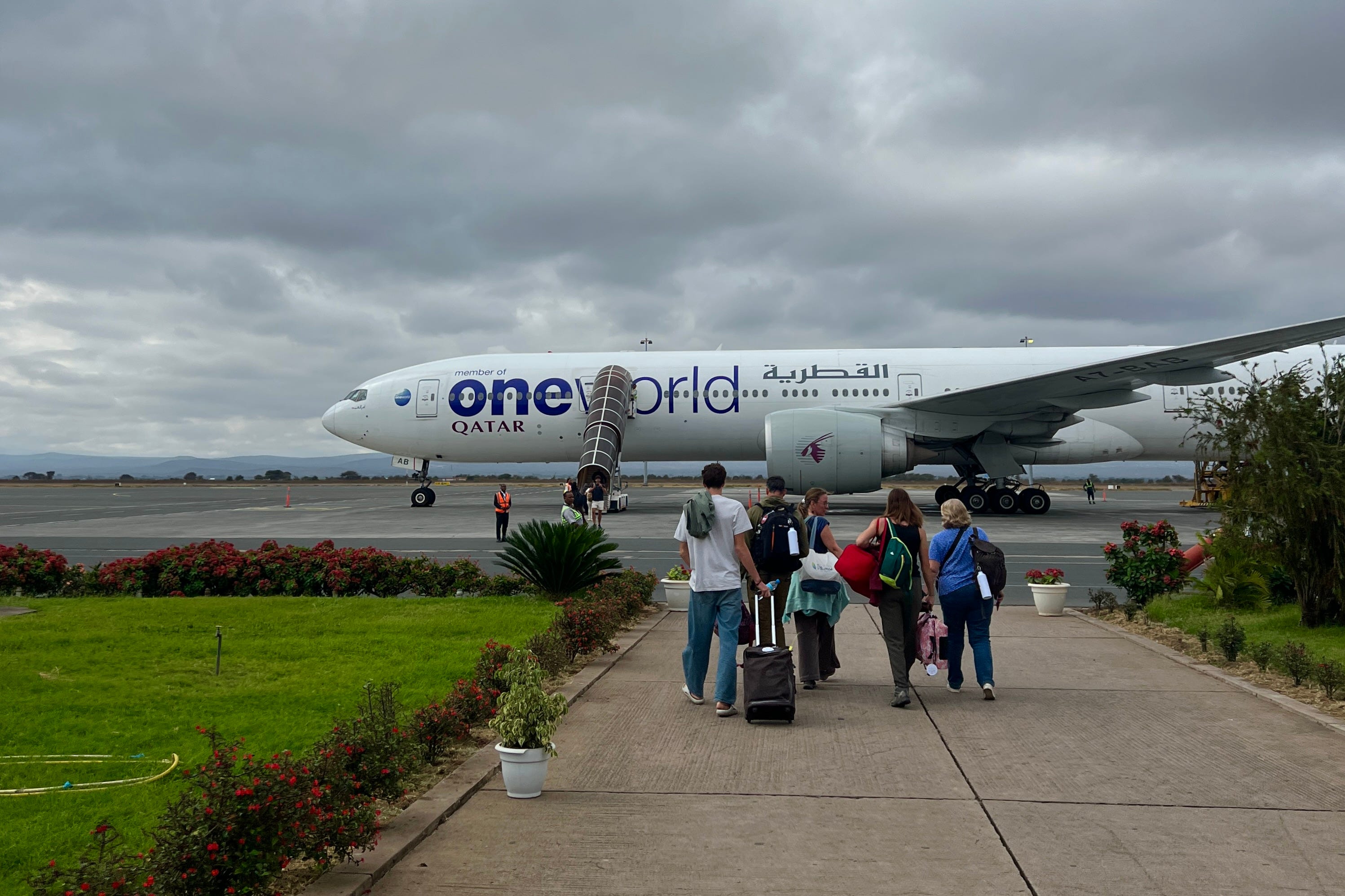
We drove to Usa River, and then to the airport afterwards, with our safari guide and friend Hans, who, along with Edson, did an incredible job keeping us all safe and unworried during such a crazy political time. Still, it was unnerving driving on roads with charcoal stains and broken barriers, and passing by torched, destroyed gas stations, with the only remaining operable ones absolutely mobbed with hundreds of drivers desperate for gas. It felt, not to be dramatic, apocalyptic, especially when there were confirmed reports of shootings and bombings coming from the bigger cities. Again, if a civil war was going to happen, this sure felt like the way it would start.
Only four of our group were actually able to take their original flights back home, but I’ll spare the reader the ensuing drama experienced by those less fortunate of us, because 1) it’s incredibly tedious, and 2) as I write this, Briana and Zachary are still trying to confirm their new flights (which may or may not leave) and I’m still sitting on the tarmac—so this tale may yet be far from over.